

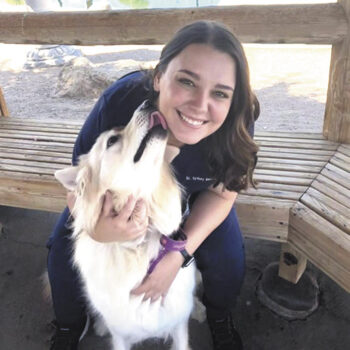
Dr. Sydney Russo
Melinda Klinka
The Pet Companions Club of PebbleCreek hosted Dr. Sydney Russo from Gentle Hearts Animal Hospital, which is a private multi-doctor practice. She brought her vet tech, Andrea, with her. While Dr. Russo does take care of cats and dogs, she also has a specialty in exotic animals, which was her topic for our meeting. One of the most fascinating aspects of her background was that she interned in Namibia, Africa, to work with cheetahs.
Exotic pets are classified as the following: pocket pets (rabbits, guinea pigs, hamsters, ferrets), reptiles (lizards, geckos, tortoises, snakes), amphibians (frogs), and birds. Each animal should have an annual exam, and some should be seen more frequently. Each species has different needs and it can be challenging to mimic these requirements in captivity. Exotic pets are very good at hiding illness, so do not wait until they seem “off.”
Dr. Russo shared that guinea pigs are prone to scurvy (lack of vitamin C) and additionally they usually need calcium. Rabbits are prone to dental issues since they have teeth that continuously grow and/or are deeply rooted. They need to have high fiber food to help grind their teeth down. Reptiles can get metabolic bone disease, which is an imbalance or lack of calcium, phosphorus, and vitamin D3. This bone disease leads to weight loss, pathological fractures, deformities, etc. Lizards also need proper UVB light. Tortoises should have smooth shells and not hills/valleys. Birds need routine grooming, including beak and nail trims, for which they use a Dremel. They also need a cage that is the appropriate size.
An exotic exam begins with a questionnaire that the pet parents fill out about their pet, including diet, supplements, medical history, husbandry, etc. Medical exams include measuring the appropriate vitals, evaluating all body systems and behavior and more. Diagnostics and treatment can include bloodwork, x-rays, ultrasound, etc.
The risk with exotics is that they are easily stressed from handling. The vet must adapt to each species. Sometimes the exam is broken into parts to allow for breaks. Anesthesia requires specialized equipment, drugs, and training. They also can refer to specialists if needed.
It was a super interesting presentation; we learned a lot! Our thanks to Dr. Russo and Andrea for their time and expertise!